

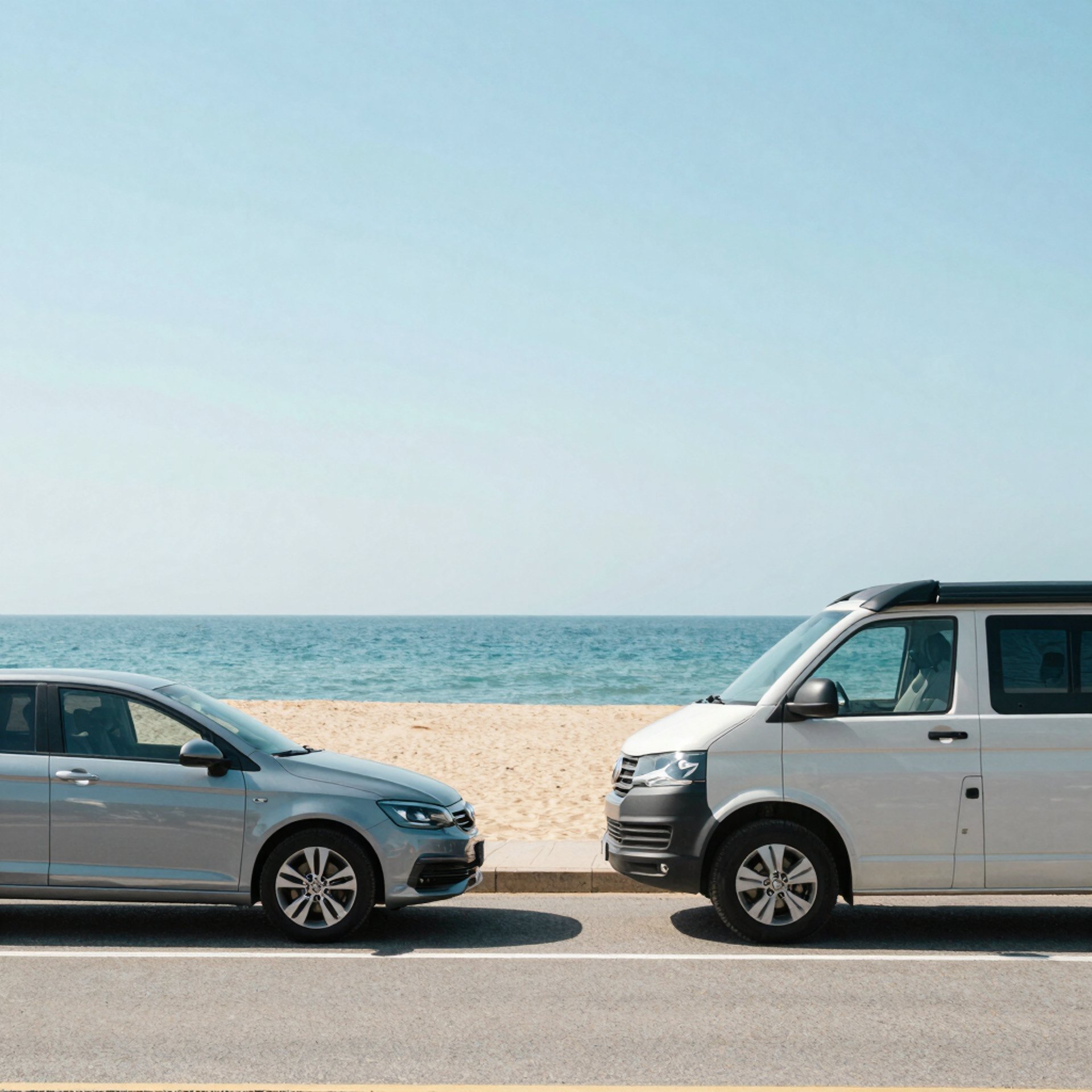
Campervan vs Car in Australia: What’s Better?
A quick guide to choosing between flexibility and comfort for your ultimate road trip adventure.
PLANNINGRECENTDIY VANBUILD
PIA
4/29/202611 min read
Planning an Australia road trip and stuck on one big decision: campervan or car?
You’re not alone — this choice can completely shape your trip.
On one hand, a campervan means total freedom, built-in accommodation, and waking up by the beach. On the other, a car is cheaper, easier to drive, and way less hassle if you prefer comfort at night.
So which one should you choose?
The honest answer: it depends on how you want to travel.
This guide breaks it down properly — costs, comfort, flexibility, and real-world pros and cons — so you can make the right call before you book anything.
Quick Answer (If You’re in a Hurry)
Go campervan if: you want freedom, flexibility, a full road trip experience and that exra bit of luxury on the road
Go car if: you want cheaper travel, easier life in the city and that simple australian abckpacker liefestyle
Now let’s get into the details.
The Real Difference Between Campervan and Car Travel
At a glance, it looks simple:
Campervan = transport + accommodation
Car = transport only
But in reality, the difference goes way deeper — especially in Australia, where distances are huge and infrastructure varies a lot.
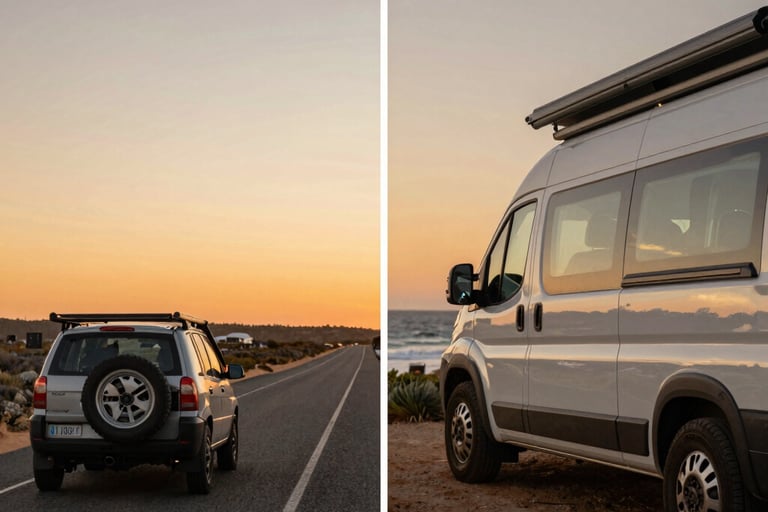
Campervan Travel in Australia
This is the classic backpacker dream.
You’ve got everything with you — your bed, your kitchen, your gear — and you can stop pretty much anywhere that allows overnight parking.
Why People Love It
1. Total Freedom
You’re not locked into hotel bookings. If you love a place, stay longer. If you don’t, move on.
2. You Save on Accommodation
Accommodation in Australia isn’t cheap. A campervan can cut a huge chunk of that cost. Especially when you have a fully self contained Van, then you can camp out in the wild on most nights, while still having the comfort of a shower and a toilet.
3. The Experience Itself
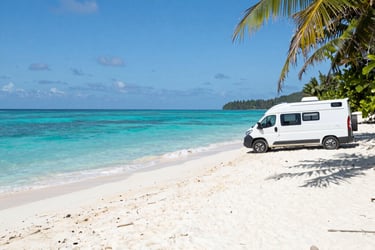
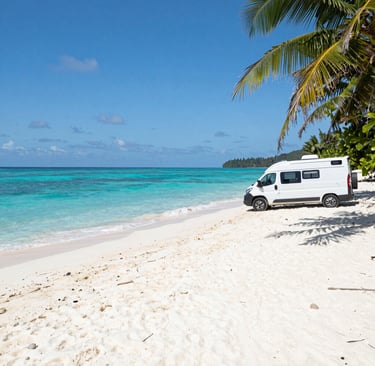
Waking up near the beach, cooking outdoors, chasing sunsets — this is what makes the trip memorable.
4. Weather protection
If it rains, you’ve got your own cozy space to relax, stay dry, and wait it out comfortably instead of being stuck in a car.
The Downsides (That People Don’t Talk About Enough)
1. It’s Not Always Cheaper
Once you factor in:
Rental cost
Fuel (vans use more)
Campsites
Insurance
…it can end up similar to (or more than) a car + hostels.
2. Driving Can Be Tiring
Vans are bigger, slower, and more affected by wind. Long drives feel longer.
3. Limited Access in Some Areas
Certain car parks, city areas, and attractions aren’t van-friendly. Obviosly this depends on your Vansize with our Medium Wheelbase we could fit in every parking space we could fit in with our Madza Tribute.
Where in Australia Does Campervan Travel Make the Most Sense?
Australia is huge, and the distances between destinations are often seriously underestimated. Because of this, your choice between a campervan and a car can completely shape your trip.
In some regions, a car and accommodation work perfectly. But in others—especially remote areas—a campervan isn’t just convenient, it’s often the smarter and more practical option.
Remote and Outback Australia
If you’re heading into remote regions, a campervan really comes into its own. Places like the Northern Territory or long-distance routes such as the Savannah Way are prime examples.
These areas are defined by:
Huge distances between towns
Limited accommodation options
Expensive or basic roadhouses
Unpredictable travel times
On routes like the Adelaide to Darwin drive, you might drive for hours without passing anything more than a fuel stop. Having your bed, food, and essentials with you gives you a level of independence that a car simply can’t match.
A campervan allows you to:
Stop wherever you want (within legal camping areas)
Avoid being locked into reaching the next town before dark
Save money where accommodation is scarce and expensive
Travel at your own pace without stress
In these regions, flexibility isn’t just nice—it’s essential.
Long-Distance Road Trips
Campervans also make the most sense on long, continuous road trips where you’re constantly moving.
Routes like:
Stuart Highway (linking Adelaide to Darwin)
Great Northern Highway
Cross-country or multi-week Outback loops
Roadtripping the Northern Territoy. Check Out "NT - The Ultimate Outback Roadtrip"
…are where campervan travel really shines.
Instead of packing and unpacking every day or chasing hotel bookings, your accommodation travels with you. This becomes a huge advantage when distances are long and plans change frequently.
National Parks and Nature-Focused Travel
If your trip revolves around nature, a campervan is often the better choice.
Regions with strong camping infrastructure—like parts of the Western Australia or the Northern Territory—are designed for this kind of travel.
You’ll find:
Scenic campsites
Low-cost or free camping areas
Access to more remote природные spots
Staying inside or near national parks means less driving back and forth and more time actually exploring.
When a Campervan Makes the Most Sense (Quick Summary)
A campervan is usually the better option if:
You’re travelling in remote or sparsely populated areas
Your trip involves long driving distances
Accommodation is limited or expensive
You want maximum flexibility and independence
Car Travel in Australia
This is the underrated option — and for a lot of travellers, it’s actually the smarter one.
If you are truly traveling Australia and you are a enthouasist about driving go for a 4WD, get the real Aussie Experience. Drive on beaches and race through the Bush.
You rent a standard car and stay in:
Hostels
Hotels
Airbnbs
Or just build a bed inside and sleep in your Car.


Why It Works So Well
1. It’s Often Cheaper (Yes, Really)
Car rental + budget accommodation can beat campervan costs — especially if you book early.
2. Way More Comfortable
Proper beds, air conditioning, showers… it adds up over a 2-week trip.
3. Easier Driving
Cars are simpler, more fuel-efficient, and less stressful on long distances.
4. More Flexibility in Towns & Cities
Parking is easier, and you’re not restricted to campsites.
The Trade-Offs
1. Less Spontaneity
You’ll need to book accommodation — especially in busy areas.
2. More Packing/Unpacking
You’ll be moving your stuff in and out more often.
3. Slightly Less “Adventure Feel”
It’s still a road trip — but it doesn’t have that same van-life vibe.
4.Less "Luxurity"
You wont have a toilet or a Shower or a vankitchen.
Where in Australia Is a Car the Better Choice?
While campervans are ideal for remote travel, there are large parts of Australia where a simple car is the more practical—and often more enjoyable—option.
This is especially true along the east coast, where infrastructure is excellent and you don’t need to carry everything with you.
The East Coast (Perfect for Car Travel)
For most travellers, the East Coast Australia—stretching from Melbourne and Sydney up to Brisbane and Cairns—is where a car really shines.
Unlike the Outback, this region offers:
Frequent towns and well-developed infrastructure
A wide range of accommodation options
Shorter driving distances between stops
Easy access to shops, fuel, and services
You’re never too far from your next stop, which removes the need to travel with a full setup like a campervan.
Beaches and Public Facilities (Huge Advantage)
One of the biggest—and often overlooked—advantages of travelling the east coast by car is how well set up the beaches are.
Across coastal towns, you’ll regularly find:
Free public showers
Clean toilets
BBQ areas and picnic spots
Drinking water in some locations
This is especially true in places like Byron Bay, Noosa, and along the Gold Coast.
Because of this, you can:
Swim, rinse off, and freshen up easily
Spend full days at the beach without needing a van setup
Travel light without sacrificing comfort
In many cases, these facilities remove one of the biggest advantages of a campervan.
Cities and Coastal Towns
The east coast is packed with vibrant cities and busy beach towns. In these places, a car is simply more practical.
Campervans can quickly become difficult because of:
Limited and expensive parking
Height restrictions
Restrictions on overnight stays
With a car, you get:
Easy parking almost anywhere
Access to central accommodation
Less stress navigating tight or busy areas
This makes a big difference in places like Sydney or Brisbane, where convenience matters.
Shorter Trips and Flexible Travel
If you’re travelling for a shorter period, a car is usually the better choice.
On the east coast, travel is naturally more flexible:
You can book accommodation as you go
Plans are easy to change
Distances are manageable
Instead of committing to campsites or managing a van setup, you can:
Move quickly between destinations
Stay spontaneously in hostels or hotels
Mix in tours and activities easily
Comfort and Lifestyle
Travelling by car on the east coast often leads to a more relaxed experience.
You can:
Eat out or grab takeaway easily
Stay in more comfortable accommodation
Avoid managing water, power, and tight living space
Since everything is close and accessible, the simplicity of a car becomes a major advantage.
When a Car Makes the Most Sense (Quick Summary)
A car is usually the better option if:
You’re travelling along the east coast
You’ll spend time in cities and coastal towns
You want easy access to beaches and public facilities
You prefer comfort and simplicity over full independence
4WD Fanatic
Cost Comparison: Campervan vs Car in Australia
One of the biggest factors in choosing between a campervan and a car is cost—and this is where things get interesting. At first glance, a car looks cheaper… but the reality depends heavily on trip length, travel style, and how many people you’re travelling with.
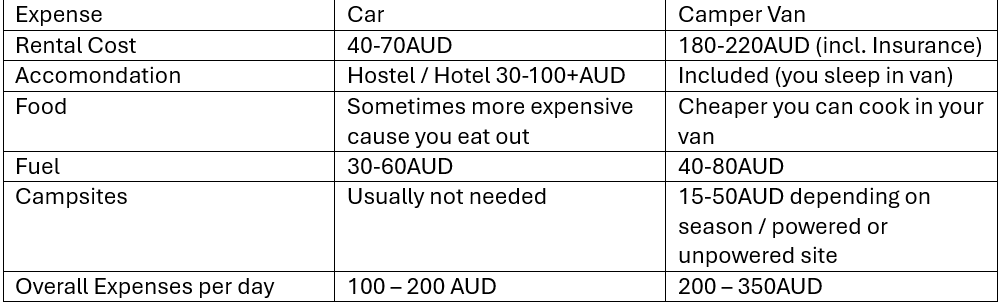
Daily Cost Breakdown
Here’s a realistic side-by-side comparison based on average prices in Australia:
Real-World Example (2 Weeks)
Let’s compare a typical 2-week road trip:
Campervan:
Rental: ~$70/day → $980
Fuel: ~$300–$400
Campsites: ~$200–$300
Total: ~$1,500–$1,800
Car + Accommodation:
Car rental: ~$50/day → $700
Fuel: ~$200–$300
Accommodation: ~$50–$120/night → $700–$1,600
Total: ~$1,600–$2,600+
The Key Insight (This Is What Most People Miss)
Short trips → Car is usually cheaper
Long trips → Campervan can become cheaper
Why?
With a car, your biggest cost (accommodation) is daily and unavoidable.
With a campervan, your biggest cost (rental) is high—but replaces accommodation entirely.
When Campervans Are Better Value
A campervan often works out cheaper if:
You’re travelling 2+ weeks
You’re splitting costs between 2–4 people
You use free or low-cost campsites
You cook most of your meals
In some cases, groups can get costs down to around $30–$50 per person per day
When Cars Are Better Value
A car is usually cheaper if:
You’re travelling solo or as a couple (short trip)
You’re sticking to the east coast (cheap hostels everywhere)
You prefer comfort over budget
You’re not driving huge distances
Final Verdict on Cost
There’s no single “cheapest” option—it depends on your trip.
Campervan = better value for long, flexible road trips
Car = better value for short trips and east coast travel
If you’re travelling for a week or less, a car almost always wins on cost.
If you’re on the road for weeks and want flexibility, the campervan starts to make more financial sense.
Car + Accommodation (Per Day)
Car rental: $40–$100
Fuel: lower
Hostel/private room: $30–$120
Estimated total: low to medium cost
Key takeaway:
Campervans can save money — but only if you do it right (free camps, budget van, minimal extras).
What Most People Don’t Consider
This is where the decision really gets clearer.
1. Trip Length Matters
Under 5 days: car wins
1–2 weeks: depends on budget + style
2+ weeks: campervan becomes more worth it
2. Who You’re Travelling With
Solo: car + hostels is often better socially
Couple: campervan can be great value
Group (3–4): campervan usually wins on cost
3. Your Travel Style
Be honest here:
Like structure, comfort, good sleep? → car
Like flexibility, spontaneity, outdoorsy vibe? → campervan
4. Where You’re Going
For routes like:
East Coast (Brisbane to Cairns)
Great Ocean Road
Tasmania
Both options work.
But if you’re heading remote (e.g. Western Australia, NT), campervans become more appealing. Just think of the heat, in remote WA or NT good luck tring to wildcamp in your van when it rarely drops below 30degrees, even at night.
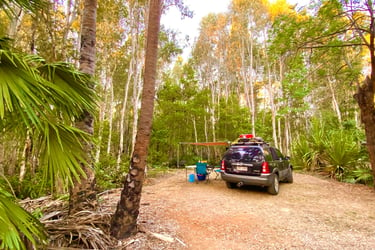
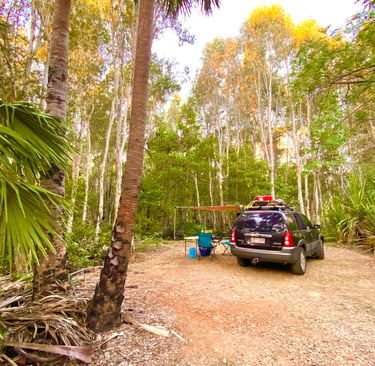
Our Car Set Up
Final Verdict: Which Should You Choose?
If you strip it down, the decision comes down to where you’re travelling and how you want to travel.
Choose a Campervan if:
You’re heading into remote regions like the Northern Territory or doing routes like the Savannah Way
Your trip is long (2+ weeks on the road)
You want maximum freedom and don’t want to rely on accommodation
You’re comfortable living in a smaller, mobile space
In these parts of Australia, a campervan isn’t just convenient—it often makes the trip possible.
Choose a Car if:
You’re travelling along the East Coast Australia
Your route includes cities like Sydney, Brisbane, or Melbourne
You’re doing a shorter or more relaxed trip
You want comfort, simplicity, and easy access to beaches, and accommodation
On the east coast, a campervan is often unnecessary—everything you need is already close by.
My Honest Recommendation
For most first-time travellers doing the East Coast:
Go with a car + accommodation
It’s easier, often cheaper, and lets you enjoy the trip without worrying about logistics.
But if you’re chasing that classic road trip experience — and you’re okay with a bit of trade-off — a campervan can be unforgettable.
WHAT WE DID:
We started our Journy along the east cost in a Car. The simple backpacker dream, a MAzda in which we installed a bed and with our one stove gas cooker we were able to afford cheap homemade meals. This lifestyle was ideal but it had it dows.
Our biggest Turnoffs while living in a Car:
The Heat. In Australia it gets incredibly hot and sleeping in a car at a million degress is not nice. Also during your day you have to keep yourself busy outdoors, which is most of the time nice and easy with so many beaches, national parks and so on to dirstract you. But a nice little midday nap is not possible (except for if you liek sweating you ass off).
The Rain: If you like it or not you are gonna have rainy days, sometimes even multiple ina row. And then you are cramped togheter in a car. Cooking in the rain is a nightmare, everything is wet, the condense water is everywhere. not one of the nicest experience.
No Toilet and shower: This was a minor issue along the east coasr, as you have on alsmost ever beach public shower and toilet facilities, but on the westcoast and in other places in australia this is not the norm.
Wild Camping: Despite all the stories on social media of wild camping, it is in suprisingly a lot of places in australia strictly forbidden and if you get caught you pay heavy fines.
Why we loved living in a car:
Flexibilty: On our roadtrip we could make our own scedule if we liked a place we simply staed longer.
"Undercover Identity": Sleeping in your car is way more "undercover" as sleeping in a Van. I stopped counting how many times we parked up in a randon neighbourhood and pretended to be aresidents car while having a good nights rest. If you were in a Van you would park up in a Caravan Park and pay your fees.
Simple Lifestyle: We loved the simpliness of living out of our car and plannign every day as it came up. Are we gonna cook today out of the trunk of our car or are we gonna head somewhere for a meal. The ultimate "Backapcker Dream" of renting / buying a car is not for nothing so famous. It gives you a taste of freedom you will never want to miss again.
After travelling all the way from Sydney to Darwin we finally decided it is time to upgrade. Alex long awaited dream to convert his own Campervan came up again and we decided to buy a Van and convert it ourselves.It is now almost a year since we "upgraded" to Vanlife and so far we absolutely love our own home on wheels.
What we love about living in a Van:
More space: We can move around the Van. On rainy days we have a space to sit, or to lie, we have a table to play gaimes or to play guitare.
Full Kitchen: Out full Kitchen, which includes a two stove gas burner allows us to cook even fancy meals without needing to be creative of ways to block the wind or to be worrying about it getting dark and to be absolutely demolished by the mosquitos.
Full Bathroom: Our Shower and Camping toilet allows us to go offgrid and still let us feel like human beeings.
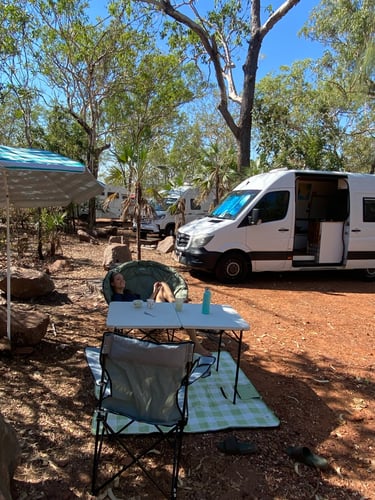
Our Campervan Set Up
Final Tip
Whichever you choose, book early — especially in peak season.
Prices in Australia jump fast, and the best options disappear quickly.
© 2025. All rights reserved.
Questions, Comments? Let us know!
Follow us and stay updated!